
Her hands and face were just a thin layer of skin over bones. Blue veins showed through her translucent skin. Her eyes were void, free of worry or feeling. Afraid of crushing her, I held her hand gently and rubbed my face against hers.
“Halmuni, how have you been?”
She looked at me like a baby staring at a stranger. Her expression seemed to ask, Who are you?
“It’s me, your granddaughter. I came all the way to see you.”
I gave her a big smile, and she responded with a small nod. I searched for any sign of recognition, any hint that she knew who I was. But she sat there in her wheelchair like someone seeing the world for the first time.
I remembered the woman who had cooked for me and looked after me during my college days. Sharing her small flat, two generations with a big gap, we had clashed constantly over outdated values. I was adamant the world was changing; she was adamant I needed tradition.
All those moments were just a distant memory now. It felt like she had been reset.
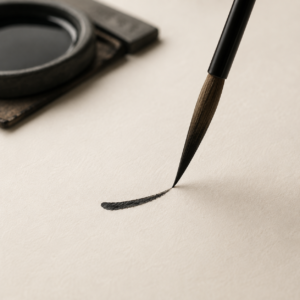
This is what life is: a big circle. We are born like a blank canvas, and we become a blank canvas at the end of our long journey. Didn’t Siddhartha see this way before anyone else did? The circle of life. This philosophical thought ran through my mind during that short encounter.
I felt something warm flushing out of me, through tears that I tried to hold back, afraid of scaring her. My aunt sat on the other side whispering into her ear, “You remember Yona, don’t you? Your granddaughter. Your son’s daughter.”
My grandmother smiled and looked at me. “Are you Yona?” she asked. A second later: “Who are you?”
At one point she said, “I have six children,” and began naming them in order of birth. I heard a name I didn’t recognize. I looked at my dad, who was standing beside us, filming quietly.
“That’s your uncle who died during the war,” he whispered. “We were escaping the war in an army truck. Your grandmother was holding my baby brother. A bombing flipped the truck. Everyone survived except the baby.” He pointed to a faded line on his forehead. “I got this from that incident.” My dad was only four but remembered every vivid detail.
My grandma repeated all her children’s names, even those of my two uncles who had passed away since. To her, they were all still alive, preserved in her memory. She said proudly how all her children went to the best university in Korea. And then she gave her name, her address where she lived when she got married. She said she’d only been to elementary school but that all her children got the best education.
I smiled at her repetitions as if it were the first time each time. I stroked her neatly combed gray hair. “You are an amazing mother.”
Recognition had been the center of her life—the quiet proof that her years of parenting had meant something. Her short-term memory is gone, but she holds tightly to the distant ones, the things she valued most: her name, her home, her children, all alive and well in the most protected corner of her mind.
It was a truly heartfelt moment. One I’m not sure I’ll ever experience with her again. Every visit now comes with a quiet footnote: This could be the last time.
It made me think of all the things we struggle for in life—the constant push for petty details and how utterly vain it all seems at the end of your long journey. What matters most, when every layer of memory is stripped away, is perhaps who you loved and who you protected.
That certainly seems to be the case with my Halmuni. Her turbulent life—having lived much of it as a widow and having endured the unbearable pain of letting go of three children—all the sadness and hardship were replaced by two things: pride and the brief, bright moments they shared happiness together.
It is fitting that the home where she now resides is run by Buddhists. A caregiver came to collect her, pausing to tell me how Halmuni inspires everyone around her. I looked at my grandmother with a fierce surge of pride: That’s my grandmother.
She looked genuinely sad to leave us, though I knew that once the elevator door shut, she will not remember any of this. The transparency of her final emotion was striking: the innocent joy of briefly recognizing her daughter, her son, and her granddaughter, melting into the raw sadness of being taken away. She really looked like a child again in that moment, without the weight of adult life.
This is the blank canvas at the end of the journey. What remains is a person reduced to what lasts the longest: love as the final memory.

잔잔한 여운이.
화이트 블랭크.캔버스에 남는다
안녕.